
BYD Atto 3 Is Engineered Around Battery Safety, Efficiency, and Long-Term Usability
Take action by understanding battery chemistry, powertrain calibration, thermal management, and chassis engineering to decide if the BYD Atto 3 fits your long-term EV expectations.
Built on BYD’s e-Platform 3.0, the vehicle integrates battery, drivetrain, and chassis into a single engineering ecosystem.
To properly evaluate the BYD Atto 3, it is essential to analyze battery architecture, electric motor calibration, charging logic, suspension design, and efficiency.
Understand auto financing options that are reducing monthly payments and negotiating smarter deals, explore our in-depth content.
e-Platform 3.0 Architecture and Structural Engineering for the BYD Atto 3 ⚙️
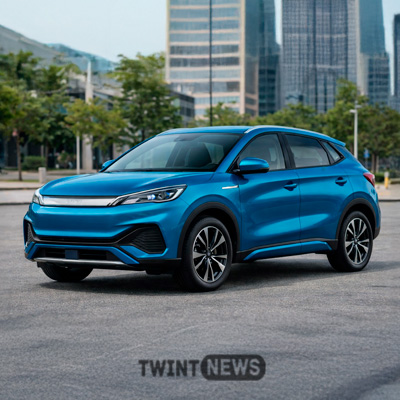
The BYD Atto 3 is based on the dedicated e-Platform 3.0, developed specifically for battery electric vehicles.
This architecture differs significantly from adapted ICE platforms, allowing tighter integration between components.
Key structural and architectural characteristics include:
- Cell-to-pack battery integration, improving rigidity and space efficiency
- Optimized load paths within the body structure
- Lower center of gravity, improving stability
- Improved torsional stiffness, benefiting handling and NVH control

Blade Battery Technology and Thermal Safety Strategy for the BYD Atto 3 🔋
At the core of the BYD Atto 3 lies BYD’s proprietary Blade Battery, using lithium iron phosphate (LFP) chemistry.
Unlike NMC batteries, LFP emphasizes thermal stability, chemical robustness, and extended cycle life.
| Specification | Data |
| Battery Type | Blade Battery |
| Chemistry | LFP |
| Gross Capacity | 60.48 kWh |
| Cooling | Liquid-cooled |
| Structural Integration | Cell-to-pack |
Electric Motor Design and Powertrain Calibration ⚡
The BYD Atto 3 employs a front-mounted permanent magnet synchronous motor (PMSM).
Instead of peak performance tuning, BYD focused on smooth torque delivery, efficiency, and mechanical longevity.
Powertrain calibration priorities include:
- Progressive torque ramp to reduce drivetrain stress
- Smooth low-speed response for urban driving
- Controlled peak output to preserve battery health
- Reduced energy spikes under acceleration
BYD Atto 3 Motor and Performance Data
| Layout | Power | Torque | 0–60 mph |
| Front-wheel drive | 201 hp | 310 Nm | ~7.3 seconds |
Energy Efficiency, Consumption, and Real-World Range 🚗
While official figures are based on WLTP testing, real-world efficiency depends on driving style, climate, and terrain. The Atto 3 benefits from moderate curb weight and efficient energy management.
Efficiency-influencing engineering factors:
- Flat battery pack improving underbody airflow
- Regenerative braking calibration focused on smooth recovery
- Efficient inverter and motor control logic
- Conservative thermal management under load
| Driving Scenario | Estimated Range |
| WLTP combined | ~420 km (261 mi) |
| Urban mixed use | 380–400 km (236–249 mi) |
| Highway driving | 330–360 km (205–224 mi) |
Charging Architecture and Battery Management Logic 🔌
Charging behavior reflects BYD’s conservative battery protection philosophy. The BYD Atto 3 supports DC fast charging but avoids extreme peak rates to preserve battery health.
| Charging Mode | Power | Typical Time |
| AC (Level 2) | 11 kW | ~6–7 hours |
| DC Fast Charging | 88 kW | 30–80% in ~29 minutes |
Explore smart ways to compare local lenders with auto loans in my area and avoid overpaying interest in today’s auto market.
Suspension Geometry, Steering, and Vehicle Dynamics 🛞
The Atto 3 uses a MacPherson strut front suspension and multi-link rear suspension, a configuration uncommon in some compact SUVs but beneficial for ride quality.
Dynamic behavior characteristics include:
- Controlled body roll
- Predictable steering response
- Good compliance over uneven surfaces
- Low NVH levels for an electric vehicle
This setup favors comfort and stability over sporty aggressiveness.
Braking System and Regenerative Integration 🧠
Braking performance combines traditional hydraulic braking with regenerative systems.
Key braking and regeneration aspects:
- Smooth blending between regen and friction braking
- Stable pedal feel under varying load
- Reduced brake wear due to regeneration
- Consistent stopping performance
This contributes to lower maintenance costs over time.
Interior Engineering, Ergonomics, and Usability for the BYD Atto 3 🧩
Inside the cabin, the Atto 3 prioritizes ergonomic efficiency and component durability. The layout integrates digital interfaces without compromising physical usability.
Interior engineering highlights:
- Rotating central touchscreen
- Digital instrument cluster with EV-specific data
- Flat floor improving rear legroom
- Integrated HVAC and battery thermal coordination
Material choices emphasize longevity rather than ultra-luxury finishes.
Long-Term Ownership and Engineering Trade-Offs 🔍
From an engineering standpoint, the BYD Atto 3 is optimized for long service life, thermal safety, and predictable costs, rather than maximum performance metrics.
The use of LFP chemistry, conservative charging, and moderate power output supports this goal.
Why the Atto 3 Appeals to Efficiency-Focused EV Buyers 🚀
The BYD Atto 3 stands out as an electric SUV designed around engineering stability and battery safety, offering dependable range and refined daily driving behavior.
Its strengths lie in battery design, platform integration, and ownership predictability, making it a compelling option for buyers focused on long-term usability.
FAQ ❓
- What is the main engineering advantage?
- The Blade Battery’s LFP chemistry provides superior thermal safety and longevity.
- Is the Atto 3 designed for performance driving?
- No, it prioritizes efficiency, smooth power delivery, and durability.
- How accurate is the real-world range?
- Most users can expect 330–400 km depending on driving conditions.
- Does conservative charging improve battery life?
- Yes, limiting peak charging power reduces long-term degradation.
- Is the BYD Atto 3 suitable for daily commuting?
- Yes, it is engineered specifically for urban and suburban usage.
