
Electric Car 4x4 Explained Through Technology, Engineering, and Real Performance in the U.S.
Learn how an electric car 4×4 is engineered, how power is managed across axles, and what technical elements truly matter before committing to an advanced all-wheel-drive EV.
The evolution of electric vehicles has fundamentally changed how four-wheel drive systems are designed and implemented.
In the U.S. market, electric 4×4 vehicles rely on software-driven architectures rather than mechanical linkages, delivering faster response times and unprecedented control over traction.
These vehicles are not simply electric versions of traditional AWD cars; they represent a new engineering paradigm.
Understand the advantages of an electric car 4 wheel drive and choose the right model for U.S. roads and climates.
Electric Car 4×4 Drivetrain Architecture and Motor Configuration 📊
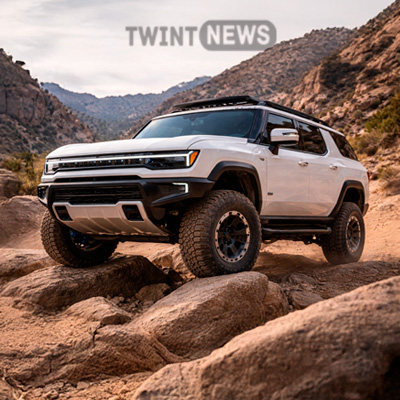
An electric car 4×4 typically uses two or more electric motors, with at least one motor assigned to each axle.
Entry-level AWD EVs generally employ a dual-motor layout, while high-performance or off-road-oriented models may use three or four motors.
Dual-motor systems allow independent torque delivery to the front and rear axles, eliminating the need for a mechanical driveshaft.
Multi-motor configurations enable advanced torque vectoring, where power is distributed not only between axles but also between individual wheels.
Torque Delivery, Power Output, and Traction Control Systems 💼
Electric motors generate peak torque from zero RPM, which radically changes traction behavior.
In electric 4×4 vehicles, torque is managed by control units that monitor wheel slip, steering angle, yaw rate, and throttle input.
Key technical advantages include:
- Instantaneous torque modulation, improving grip on low-traction surfaces
- Electronic torque vectoring, replacing mechanical differentials
- Adaptive traction algorithms, responding to road conditions in real time
- Regenerative braking integration, stabilizing the vehicle during deceleration
These systems allow electric 4×4 vehicles to outperform traditional AWD systems in both on-road stability and low-speed control.
Battery Technology, Voltage Systems, and Energy Density 🚗
Battery design is central to electric 4×4 performance.
Most modern AWD EVs use lithium-ion battery packs based on NMC or NCA chemistry, offering high energy density and stable discharge rates.
Battery packs are typically mounted within the floor structure, lowering the center of gravity and improving chassis rigidity.
Higher-end models increasingly adopt 800-volt electrical architectures, enabling faster charging, reduced heat generation, and improved power delivery under load.
However, additional motors increase energy demand, which explains why AWD EVs generally have lower range figures than equivalent two-wheel-drive versions.
Thermal Management Systems and Performance Stability for the Electric Car 4×4 💵
Electric 4×4 vehicles rely heavily on advanced thermal management to maintain performance. Heat affects battery efficiency, motor output, and inverter reliability.
Modern systems include:
- Liquid-cooled battery packs, maintaining optimal temperature windows
- Independent motor cooling circuits, preventing power derating
- Heat pumps, improving cold-weather efficiency
- Software-controlled thermal balancing, adapting to driving conditions
Effective thermal management ensures consistent performance during towing, high-speed driving, or off-road use.
Technical Comparison of AWD EV System Elements 💼
| System Component | Two-Motor AWD | Multi-Motor AWD | Technical Impact |
| Motor layout | Front + rear | Individual wheel motors | Higher torque precision |
| Voltage architecture | 400V | 800V (common) | Faster charging, less heat |
| Torque vectoring | Axle-based | Wheel-based | Superior traction control |
| Thermal management | Shared loops | Independent circuits | Sustained performance |
Efficiency Losses, Range Calculations, and Real-World Data 🏦
Adding motors and drivetrain components increases mass and energy consumption.
In real-world conditions, AWD EVs typically experience a 5–15% reduction in driving range compared to rear-wheel-drive variants.
Range is influenced by:
- Motor efficiency curves, varying by load
- Vehicle mass, especially battery size and motors
- Software drive modes, prioritizing efficiency or performance
- Environmental conditions, including temperature and terrain
Buyers should evaluate EPA estimates alongside real-world driving data.
Compare new electric car technologies and learn how electrification is reshaping the U.S. automotive market.
Electric Car 4×4 Durability, Maintenance, and Long-Term Engineering Considerations 🔑
Despite increased complexity, electric 4×4 vehicles often require less mechanical maintenance than traditional AWD vehicles.
The absence of transfer cases, clutches, and differentials reduces wear points.
Long-term considerations include:
- Motor and inverter durability, influenced by thermal control
- Battery degradation rates, affected by charging habits
- Software updates, refining torque and efficiency algorithms
- Tire wear, accelerated by high torque output
Engineering quality in these areas defines long-term ownership value.
Electric 4×4 Vehicles as Engineering Platforms 📈
An electric car 4×4 is not simply a consumer product but an integrated engineering system.
Software, electronics, and mechanical design operate together to deliver performance, safety, and efficiency.
For drivers who demand precision, control, and adaptability, electric 4×4 vehicles represent one of the most advanced mobility platforms currently available.
A Technical Perspective on Electric Car 4×4 Ownership 🚀
Choosing an electric 4×4 requires understanding the technology beneath the surface.
Motor layout, voltage architecture, thermal management, and software sophistication matter more than headline acceleration figures.
When evaluated through an engineering lens, electric 4×4 vehicles deliver exceptional control and future-ready performance without the compromises associated with four-wheel drive.
FAQ ❓
- How many motors does an electric 4×4 usually have?
- Most use two motors, but high-performance models may use three or four.
- Do electric 4×4 vehicles use traditional differentials?
- No, torque distribution is handled electronically through software.
- Does AWD significantly reduce EV range?
- Yes, range typically drops between 5% and 15% depending on design.
- Are 800V systems important in electric 4×4 vehicles?
- Yes, they improve charging speed, efficiency, and thermal stability.
- Is maintenance higher for electric AWD vehicles?
- Mechanical maintenance is usually lower, though tire wear can be higher.
