
Ford Electric Cars: Take Action and Discover the Best Electric Models for the U.S. Market
Explore specs, trims, real-world range, and ownership insights about Ford electric cars to make a confident, future-proof buying decision.
Ford electric cars are playing an increasingly strategic role in the American automotive market as demand for zero-emission vehicles continues to grow.
With a strong legacy in engineering and mass production, Ford has leveraged its experience to deliver electric models that balance performance and long-term ownership value.
Move forward by evaluating BYD Atto 3 real performance figures, efficiency metrics, and structural design choices that shape everyday driving.
Ford Electric Cars and the Brand’s EV Strategy in the U.S. ⚡
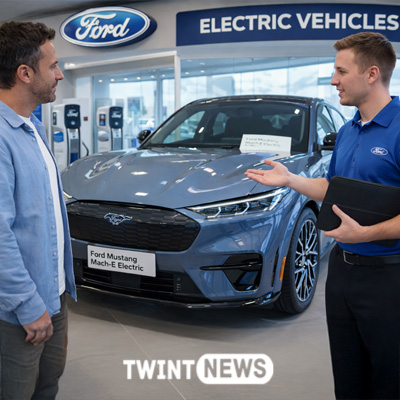
Ford’s approach to electrification focuses on scalable platforms, recognizable nameplates, and real-world usability.
Instead of experimental designs, the brand adapts proven models into electric versions, easing the transition for traditional gasoline-vehicle owners.
Key strategic pillars behind Ford electric cars include:
- Dedicated EV platforms optimized for battery placement and safety
- Competitive driving range aligned with American commuting patterns
- Fast-charging compatibility with major U.S. charging networks
- Lower long-term maintenance costs compared to combustion vehicles
Ford Mustang Mach-E Electric SUV Performance and Specs 🚗
The Ford Mustang Mach-E is one of the most recognizable Ford electric cars, combining electric efficiency with performance-oriented tuning.
Despite its SUV form factor, it delivers strong acceleration and responsive handling.
Technical highlights include:
- Permanent-magnet electric motors
- Rear-wheel drive or all-wheel drive configurations
- Instant torque delivery for quick acceleration
- Advanced battery thermal management for performance consistency
Mustang Mach-E Technical Specifications 🔢
| Specification | Details |
| Battery Options | 70–91 kWh |
| Horsepower | Up to 480 hp |
| Torque | Up to 634 lb-ft |
| EPA Range | Up to 312 miles |
| 0–60 mph | As quick as 3.5 seconds |
Ford F-150 Lightning Electric Pickup Capabilities ⚙️
The Ford F-150 Lightning expands Ford electric cars into the pickup segment, maintaining utility while introducing electric efficiency.
It is designed for drivers who need towing, hauling, and worksite functionality.
Core capability features include:
- Dual-motor AWD standard
- High towing capacity compared to other electric pickups
- Onboard power generation for tools and equipment
- Large front trunk (frunk) for additional cargo
F-150 Lightning Technical Specifications 🔢
| Specification | Details |
| Battery Options | 98–131 kWh |
| Horsepower | Up to 580 hp |
| Torque | 775 lb-ft |
| EPA Range | Up to 320 miles |
| Towing Capacity | Up to 10,000 lbs |
Ford E-Transit Electric Commercial Van Overview 🚐
The Ford E-Transit targets businesses and fleets seeking cost-efficient electrification. Among Ford electric cars, it focuses less on performance and more on operational savings and reliability.
Business-oriented advantages include:
- Predictable daily range for urban delivery routes
- Lower servicing costs due to fewer moving parts
- Multiple body configurations for diverse business needs
- Telematics integration for fleet management
E-Transit Technical Specifications 🔢
| Specification | Details |
| Battery Capacity | 68 kWh |
| Horsepower | 266 hp |
| Torque | 317 lb-ft |
| EPA Range | Around 126 miles |
| Payload Capacity | Up to 3,800 lbs |
Ford Explorer Electric and Future EV Expansion 🌍
Ford continues to expand Ford electric cars with new models planned for the U.S. and global markets. The upcoming electric Explorer focuses on family usability and competitive pricing.
Expected characteristics include:
- Mid-size SUV dimensions
- Enhanced efficiency-focused electric motors
- Improved battery density for extended range
- Advanced driver-assistance systems as standard
Expected Explorer Electric Technical Profile 🔢
| Category | Estimated Data |
| Battery | Approx. 80–100 kWh |
| Estimated Range | 300+ miles |
| Drivetrain | RWD / AWD options |
| Target Segment | Family electric SUV |
Understand how electric car charging companies, pricing models, network reliability, and expansion plans affect long-term ownership.
Ownership Costs and Charging Considerations for Ford Electric Cars 💰
One of the main advantages of Ford electric cars is reduced operating cost. Electricity is generally cheaper than gasoline, and EVs require less routine maintenance.
Ownership-related benefits include:
- Lower fueling costs per mile
- Reduced brake wear due to regenerative braking
- Fewer mechanical components requiring service
- Eligibility for incentives and tax credits, depending on location
Charging compatibility with home Level 2 chargers and public fast chargers improves daily convenience.
Why Ford Electric Cars Are a Practical EV Choice in 2025 🧭
Ford electric cars stand out by offering diverse vehicle types rather than focusing on a single niche.
From performance SUVs to work-ready trucks and commercial vans, the lineup supports different usage profiles.
This diversity, combined with Ford’s extensive U.S. dealer network, supports confidence in long-term ownership, making the transition to electric vehicles more accessible for American drivers.
FAQ ❓
- Are Ford electric vehicles reliable for daily use?
- Yes, they are engineered for everyday commuting with fewer maintenance needs than gas vehicles.
- Do Ford electric models support fast charging?
- Most models are compatible with DC fast-charging networks in the U.S.
- How expensive is battery replacement?
- Battery systems are designed for long-term durability and are covered by extended warranties.
- Can Ford electric vehicles handle long trips?
- Models like the Mach-E and F-150 Lightning offer ranges suitable for highway travel.
- Are Ford electric vehicles eligible for tax incentives?
- Eligibility depends on federal and state programs and buyer qualifications.
