
Private Sale Car Loan Inspection and Paperwork Guide in Canada
If you are considering buying a vehicle from a private seller, take time to understand how a private sale car loan works before making a purchase. While private sales can offer lower prices and greater negotiation flexibility, obtaining financing often involves additional steps compared to buying through a dealership.
Lenders usually require more documentation, and buyers must take greater responsibility for verifying the vehicle’s condition and legal status.
Understanding the inspection process and required paperwork can help Canadian buyers avoid expensive surprises while improving their chances of financing approval. Before finalizing the transaction, be sure to review all documentation carefully and confirm that the vehicle meets lender requirements.
Why Private Sale Car Loan Require Additional Attention 🚗
A private sale car loan differs from traditional dealership financing because the lender has fewer safeguards regarding the vehicle being purchased.
When a dealership sells a vehicle, many administrative tasks are already handled internally. In private transactions, buyers must independently verify ownership records, vehicle condition, accident history, and registration details before financing can be finalized.
These additional responsibilities make proper preparation essential.
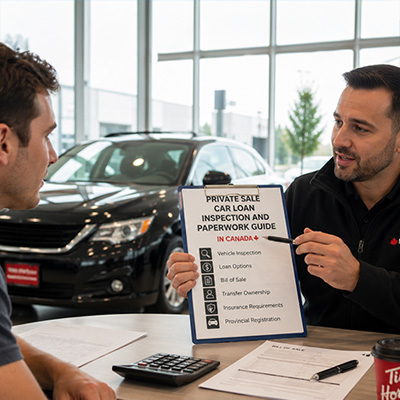
Common Risks Associated with Private Vehicle Transactions ⚠️
Private sales can provide savings, but they also involve potential risks.
Common concerns include:
- Undisclosed accident history 📋.
- Outstanding liens on the vehicle 💰.
- Odometer discrepancies 📊.
- Mechanical issues 🔧.
- Incomplete ownership documentation 📄.
Careful inspections and documentation reviews can significantly reduce these risks.
Essential Steps Before Applying for a Private Sale Car Loan 📝
Preparation is critical when financing a vehicle through a private seller.
Before applying:
- Confirm vehicle ownership 📂.
- Request maintenance records 🔍.
- Review accident history reports 📋.
- Verify vehicle identification numbers (VIN) 🚘.
- Schedule an independent inspection 🔧.
Completing these steps demonstrates diligence and helps prevent costly problems after purchase.
Verify Ownership and Registration Records 📑
One of the first tasks should be confirming that the seller legally owns the vehicle.
Buyers should verify:
- Vehicle registration documents.
- Seller identification.
- VIN consistency across documents.
- Ownership history.
- Provincial registration requirements.
Any discrepancies should be investigated before proceeding with financing.
Obtain a Vehicle History Report: Private Sale Car Loan 📊
A vehicle history report can reveal important information about the vehicle’s past.
Reports may provide details regarding:
- Previous accidents.
- Insurance claims.
- Registration history.
- Mileage records.
- Existing liens.
Many lenders appreciate borrowers who complete these checks before submitting financing applications.
Schedule an Independent Mechanical Inspection 🔧
A professional inspection can identify issues that may not be visible during a casual review.
Inspectors commonly evaluate:
- Engine condition.
- Transmission performance.
- Brake systems.
- Suspension components.
- Structural damage.
Spending a small amount on an inspection can potentially save thousands of dollars in future repairs.

Documentation Required for a Private Sale Car Loan 🔎
Because private transactions involve greater lender risk, documentation requirements are often more extensive.
Typical lender requirements include:
- Purchase agreement.
- Vehicle information.
- Seller details.
- Proof of income.
- Government-issued identification.
Providing complete documentation can help accelerate approval decisions.
Key Paperwork Buyers Should Collect 📁
A complete transaction file should generally include:
- Bill of sale.
- Vehicle registration.
- VIN verification.
- Safety inspection documentation (if required).
- Vehicle history report.
- Lien search results.
Keeping organized records helps both the lender and the buyer.
Understanding Lien Checks Before Purchase 💰
A lien indicates that another party may have a legal financial claim against the vehicle.
Before completing a purchase, buyers should confirm:
- Whether active liens exist.
- Whether previous financing has been discharged.
- Whether registration records match ownership information.
Failing to verify liens can create serious complications after purchase.
How Lenders Evaluate Private Sale Transactions 🏦
When reviewing a private sale car loan, lenders often examine both the borrower and the vehicle.
Common review factors include:
- Credit profile.
- Employment stability.
- Income verification.
- Vehicle value.
- Vehicle condition.
A well-documented transaction typically receives smoother consideration than one with incomplete records.
Vehicle Inspection Checklist for Canadian Buyers 📋
Before finalizing a private vehicle purchase, consider reviewing the following areas carefully.
| Inspection Area | What to Verify |
| Exterior Condition | Paint, body damage, rust |
| Interior Condition | Seats, controls, electronics |
| Mechanical Systems | Engine, transmission, brakes |
| Tires | Tread depth and wear patterns |
| Documentation | Ownership, registration, VIN |
Information verified: June 2026.
Warning Signs That Should Not Be Ignored 🚨
Certain situations may indicate elevated risk.
- Seller refuses inspection 🔧.
- Incomplete paperwork 📄.
- VIN inconsistencies 🚘.
- Unusually low pricing 💲.
- Missing maintenance records 📋.
When these issues appear, buyers should proceed cautiously and investigate further.
Building Credit Through Responsible Vehicle Financing 📚
For borrowers with limited or challenged credit histories, financing a vehicle through a private seller may also provide an opportunity to strengthen credit profiles.
Making payments consistently and maintaining responsible financial habits can gradually improve borrowing opportunities over time. Positive payment history often becomes one of the most valuable tools for future financing approvals.
Private Sale Car Loan Strategies That Help Buyers Avoid Costly Mistakes 🚀
A private sale car loan can provide access to attractive vehicle pricing and expanded purchasing options, but success depends on preparation. Thorough inspections, complete documentation, lien verification, and careful lender comparisons all contribute to a safer transaction.
By approaching the process systematically and conducting proper due diligence, Canadian buyers can reduce risk, secure financing more efficiently, and enjoy greater confidence throughout the vehicle purchasing process.
FAQ ❓
Can I finance a vehicle purchased from a private seller in Canada?
- Yes. Many lenders offer financing programs specifically designed for private vehicle purchases.
Why is a vehicle inspection important?
- An independent inspection helps identify mechanical issues, structural damage, and potential repair costs before purchase.
What documents are usually required for a private sale car loan?
- Common requirements include identification, proof of income, vehicle information, registration documents, and a bill of sale.
What is a lien and why does it matter?
- A lien is a legal claim against the vehicle by a lender or creditor. Buyers should verify that any existing liens have been properly discharged.
Can a private sale car loan help build credit?
- Yes. Consistent on-time payments can contribute positively to a borrower’s credit history over time.
