
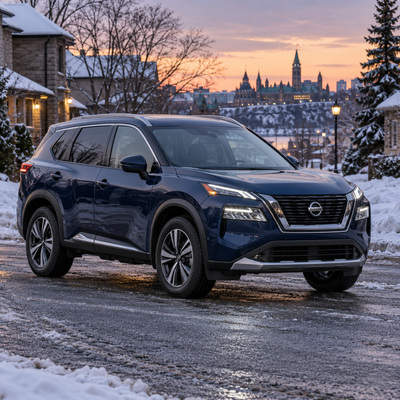
Nissan Rogue 2026 Canada for comparing AWD, winter technology and driver-assist features
The Nissan Rogue 2026 Canada is often chosen for one reason above the rest: it has to work in January. That puts the focus on technology that helps in snow, darkness and long highway drives, rather than on features that mainly impress in a showroom.
Driver-assist systems, all-wheel drive management and camera coverage all behave differently in winter conditions. Knowing what each one does, and where its limits are, makes the buying decision far more practical.
The sections below explain the core technology, what to test before signing and what to confirm on the window sticker.
What the Nissan Rogue 2026 Canada brings to the road? 🔎
The Nissan Rogue 2026 Canada uses a variable compression turbocharged engine rated at 201 horsepower and 225 pound-feet of torque, paired with a continuously variable transmission and Intelligent All-Wheel Drive available depending on trim. Published fuel consumption is 8.4 litres per 100 kilometres in the city and 6.8 on the highway.
Nissan also markets a plug-in hybrid version of the Rogue, which uses a different powertrain and should be compared separately after confirming its Canadian availability and specifications.
For the gas model, the core technology story is the combination of standard all-wheel drive with a suite of driver-assist features that varies by trim.
That combination matters because traction and assistance work together. All-wheel drive helps the crossover pull away on slippery surfaces, while the assist systems help the driver keep distance and lane position when visibility drops.
How to evaluate the technology before buying ✅
Winter shows which features earn their place. During the test drive and on paper, confirm:
- which driver-assist features are included on the trim being quoted;
- whether adaptive cruise control with lane centring is available;
- the camera coverage around the vehicle;
- heated seats, heated steering wheel and remote start;
- the wheel size and whether a winter tire package fits it;
- how the infotainment screen performs with gloves or cold hands.
Driver assistance in snow 🛡️
Camera- and radar-based systems rely on clean sensors. Snow and road salt can block them, and the vehicle will usually display a warning when a system is temporarily unavailable. Clearing the front bumper and windshield area before driving keeps those features working.
Adaptive cruise control is useful on dry highways, but in heavy snow it is safer to drive manually. Treat assist features as support, not as a replacement for judgement on slippery roads.
All-wheel drive is not winter tires ❄️
All-wheel drive improves acceleration on slippery surfaces, but braking and cornering depend on tire compound. A matched set of winter tires remains the single most important winter purchase, regardless of drivetrain.
Wheel size affects that purchase too. Larger wheels usually require pricier winter tires, so some owners buy a separate set of smaller wheels for the cold season. Confirm with the dealer which sizes are approved for the trim before ordering.
Financing the purchase 💳
Buyers comparing payment structures can review how a zero down payment car loan works in Canada before visiting the dealer.
The figures that define the Nissan Rogue 2026 Canada 📊
When comparing, the Nissan Rogue 2026 Canada should be read through drivetrain, fuel consumption and cargo capacity. Those three figures explain winter capability, running cost and practicality for family trips.
Cargo capacity of up to 2,098 litres reduces the need for roof boxes, which add drag and fuel use on long drives. For skiing families, that space often decides whether gear fits inside or on top of the vehicle.
Heated features also deserve attention in the comparison. Heated seats, a heated steering wheel and remote start are used almost every day from November to March, which makes them some of the most valuable technology items for Canadian owners.
Reference specifications 🧾
| Item | Specification | What to watch |
| Engine | Variable compression turbocharged | Oil must match specification |
| Output | 201 horsepower and 225 pound-feet | Adequate for family highway use |
| Transmission | Continuously variable | Fluid follows its own schedule |
| Drivetrain | Front- or all-wheel drive by configuration | Still needs winter tires |
| Fuel consumption | 8.4 L/100 km city and 6.8 highway | Cold weather raises real figures |
| Cargo capacity | Up to 2,098 litres | Avoids roof accessories |
Figures reflect the Canadian gas lineup as of the verification date. Pricing is excluded because it varies by province, trim and promotion, and driver-assist content should be confirmed trim by trim.

Risks and points of attention ⚠️
Three oversights cause trouble in winter. Assuming every trim carries the same driver-assist content. Relying on sensors that are covered in snow. And treating all-wheel drive as a substitute for winter tires.
Readers who want the full trim and ownership breakdown can review the specs, trims and ownership points for this crossover, while buyers with limited savings can learn how to get approved for a car loan with no money down.
Technology that earns its keep in January 🧭
Choosing a Nissan Rogue 2026 Canada works best when the technology is judged by how it performs on a cold, dark morning. With the trim’s assist features confirmed, clean sensors made a habit and a proper set of winter tires in place, the crossover delivers the confidence it promises.
FAQ ❓
- Is all-wheel drive standard on the gas model in Canada?
- It’s available on most trims of the gas lineup, but exact standard-versus-optional status can shift by trim and year. Confirm on the configurator for the specific trim being quoted.
- Do driver-assist features work in heavy snow?
- They may be limited if sensors are blocked. The vehicle usually displays a warning when that happens.
- Where can official specifications be confirmed?
- On the official Rogue page at Nissan Canada, with details by trim.
- Is there a plug-in hybrid version?
- Nissan markets a plug-in hybrid Rogue with a different powertrain. Confirm Canadian availability and compare it separately.
- Do I still need winter tires?
- Yes. All-wheel drive helps traction, but braking and cornering depend on tire compound.
