
Electric Car Price Range in the US: Compare Costs, Value, and Smart Buying Strategies
Explore the electric car price range in the United States with updated numbers, realistic budgets, and strategic insights to help you choose the right EV.
The electric car price range in the United States has expanded significantly in recent years, offering options that now span from budget‑friendly used models to high‑performance luxury EVs.
Understanding this range is essential for buyers who want to align purchase price with ownership goals, energy savings, incentives, and resale expectations.
Move forward by evaluating BYD Atto 3 real performance figures, efficiency metrics, and structural design choices that shape everyday driving.
Understanding the electric car price range across entry‑level, mid‑range, and premium segments 🚗
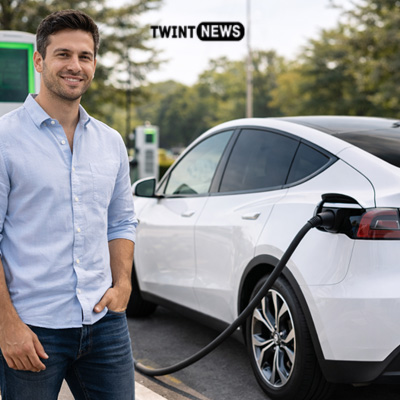
The current EV market can be divided into three primary pricing segments, each designed to meet different needs and financial profiles.
Entry‑level EVs focus on affordability and efficiency, mid‑range models balance performance and technology, while premium electric vehicles emphasize power, range, and luxury.
Recognizing how these segments differ helps buyers avoid paying for features they do not need, while ensuring they do not underestimate long‑term costs such as insurance and charging infrastructure.

Entry‑level electric car price range for budget‑focused buyers in the US ⚡
Entry‑level electric vehicles typically fall between $18,000 and $30,000, including both new and used options.
These models are designed for daily commuting, short trips, and cost‑efficient ownership.
Buyers in this tier often prioritize low monthly payments, minimal maintenance, and access to federal or state incentives.
Although range and performance are more limited, these vehicles offer excellent value within the lower price range.
Affordable new electric vehicles under $30,000 in 2025 🔋
Several manufacturers now offer new EVs at accessible prices, often supported by incentives that reduce effective cost.
These models generally deliver ranges between 200 and 260 miles and focus on urban practicality.
- Chevrolet Bolt EV – starting around $26,500, offering approximately 259 miles of range and low operating costs.
- Nissan Leaf – priced near $28,000, with a range suited for city use and reliable charging compatibility.
- Mini Cooper SE – positioned around $30,000, emphasizing design and agility over long‑distance driving.
These vehicles demonstrate how the lower price range can still provide modern safety features, infotainment systems, and dependable daily usability.
Used electric vehicles expanding the lower electric car price range 🧩
The used EV market has become a major entry point for budget‑conscious buyers.
Rapid depreciation on early‑generation EVs allows buyers to access electric mobility at significantly reduced prices.
Used Nissan Leaf models from 2019–2021 often sell between $14,000 and $18,000.
Chevrolet Bolt used models commonly range from $16,000 to $20,000 depending on mileage.
BMW i3 used pricing typically falls between $15,000 and $19,000.
Within the lower price range, used EVs provide outstanding cost efficiency, though buyers should always verify battery health and remaining warranty coverage.
Mid‑range electric car price range balancing performance and value ⚙️
Mid‑range EVs generally fall between $30,000 and $55,000 and represent the most competitive segment of the market.
These vehicles offer longer range, faster charging, advanced driver assistance, and stronger resale value.
For many households, this segment delivers the best balance between upfront cost and long‑term savings, making it the most popular price range in the US.
Popular mid‑range electric vehicles and pricing benchmarks 🔌
Mid‑range EVs appeal to drivers seeking versatility, comfort, and extended driving capability without entering luxury pricing territory.
- Tesla Model 3 – typically priced from $38,000 to $45,000 depending on configuration.
- Tesla Model Y – starting around $44,000, offering SUV practicality and strong demand.
- Hyundai Ioniq 5 – ranging from $41,000 to $52,000, known for fast charging and modern design.
- Ford Mustang Mach‑E – priced between $43,000 and $57,000 depending on trim.
These models dominate the core price range due to their blend of range, technology, and brand recognition.
| Model | Starting Price | Estimated Range | Charging Speed |
| Tesla Model 3 | $38,000 | 272–333 miles | Up to 250 kW |
| Tesla Model Y | $44,000 | 279–330 miles | Up to 250 kW |
| Hyundai Ioniq 5 | $41,000 | 266–303 miles | Up to 235 kW |
| Ford Mach‑E | $43,000 | 247–312 miles | Up to 150 kW |
Compare new electric car technologies and learn how electrification is reshaping the U.S. automotive market.
Premium and luxury electric car price range in the US market 🏁
Luxury electric vehicles generally begin around $60,000 and can exceed $120,000 depending on brand and performance specifications.
These EVs focus on cutting‑edge technology, superior materials, and exceptional acceleration.
While they command higher upfront costs, premium models may appeal to buyers prioritizing innovation, status, and long‑term brand value within the upper electric car price range.
High‑end electric vehicles and their price positioning 🚀
Premium EVs set benchmarks for performance and technological sophistication.
- Tesla Model X – starting near $80,000 with long range and advanced software features.
- Tesla Model S – priced from $75,000 to over $100,000 for Plaid versions.
- BMW iX – starting around $85,000, combining luxury and strong range.
- Mercedes‑Benz EQS – ranging from $105,000 to $130,000 depending on configuration.
These vehicles represent the top of the electric car price range, often delivering acceleration comparable to supercars alongside premium interiors.
| Model | Base Price | 0–60 mph | Range |
| Tesla Model S | $75,000 | 3.1 sec | 405 miles |
| Tesla Model X | $80,000 | 3.8 sec | 333 miles |
| BMW iX | $85,000 | 4.4 sec | 324 miles |
| Mercedes EQS | $105,000 | 4.1 sec | 350 miles |
Factors influencing electric car price range beyond MSRP 🔍
Several variables significantly impact real‑world EV pricing. Federal tax credits of up to $7,500, state incentives, leasing structures, and charging installation costs.
Insurance premiums for EVs can also be higher due to repair complexity, while electricity costs vary by region.
Understanding these elements ensures the electric car price range is evaluated holistically rather than solely by sticker price.
Smart strategies to choose the right electric car price range for your lifestyle 📊
Selecting the ideal EV price range requires aligning driving habits, budget flexibility, and long‑term plans.
Buyers who drive short distances may benefit most from entry‑level options, while frequent travelers or families often find mid‑range EVs more suitable.
Luxury EVs suit buyers seeking innovation and performance, though depreciation should be carefully considered.
Matching lifestyle needs to the appropriate electric car price range prevents overspending and maximizes satisfaction.
Make sense of the electric car price range in 2025 and beyond 🔮
The electric car price range continues to broaden as technology improves and competition increases.
Entry‑level EVs are becoming more capable, mid‑range models are redefining mainstream mobility, and luxury EVs push the boundaries of performance.
For buyers in the US, understanding this spectrum enables smarter decisions, stronger resale outcomes, and long‑term savings.
Choosing wisely within the electric car price range transforms EV ownership into a strategic investment rather than a costly experiment.
FAQ ❓
- What is the cheapest electric car available in the US today?
- The Nissan Leaf and Chevrolet Bolt are among the most affordable new EVs, often priced below $30,000 before incentives.
- How much should I budget for a mid‑range electric vehicle?
- Most mid‑range EVs fall between $38,000 and $55,000 depending on range, features, and brand.
- Are luxury electric vehicles worth the higher price?
- Luxury EVs offer advanced technology and performance, but buyers should consider depreciation and insurance costs.
- Do electric cars cost less to own long term?
- Lower maintenance and fuel costs often make EVs cheaper to own over time despite higher upfront prices.
- Will electric car prices decrease in the future?
- Increased competition and battery innovation are expected to gradually lower prices across most EV segments.
