
Personal Loan for Car vs Traditional Car Loan for Canadians
Many Canadians with poor credit assume that a standard auto loan is their only path to vehicle ownership, but exploring alternatives such as a personal loan for car purchases today could reveal solutions that better match your needs and financial situation.
However, alternative borrowing solutions may offer greater flexibility depending on your financial circumstances, income stability and long-term goals.
Understanding the differences between these financing structures can help you avoid costly mistakes and choose the option that best supports your budget and credit recovery journey, so take time to compare available offers before making a final decision.
Understanding the Main Differences Between Financing Options 🚗
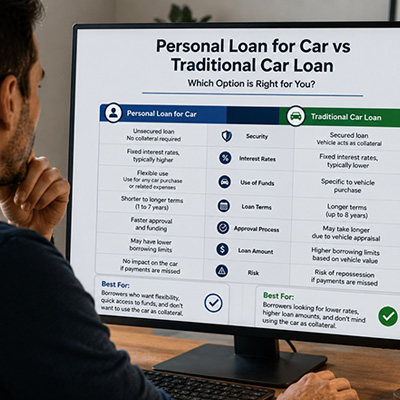
When Canadians apply for vehicle financing, lenders generally offer two primary solutions: secured auto loans and unsecured personal loans. The biggest distinction lies in the collateral.
With traditional vehicle financing, the vehicle itself serves as security for the lender. If payments are missed, the lender may repossess the car. Because of this reduced risk, lenders are often willing to approve borrowers with lower credit scores and offer more competitive interest rates.
A personal borrowing solution, on the other hand, is usually unsecured. Since the lender assumes greater risk, approval standards may be stricter and rates can sometimes be higher.
When a Personal Loan for Car May Be Worth Considering 💰
A personal loan for car can be attractive in specific situations where flexibility matters more than the lowest possible interest rate.
Some common scenarios include:
- Purchasing an older vehicle
- Buying from a private seller
- Avoiding dealership financing restrictions
- Financing a vehicle that does not meet lender age requirements
- Building flexibility into how funds are used
Because the money is typically provided directly to the borrower, buyers often have greater control over the purchase process.
Greater Freedom in Vehicle Selection 🔑
Traditional lenders frequently impose restrictions on vehicle age, mileage and condition.
A personal loan can allow buyers to:
- Purchase higher-mileage vehicles
- Consider classic or specialty vehicles
- Buy directly from family members
- Shop in private marketplaces
This flexibility can be valuable for borrowers seeking affordable transportation options.
Potential Drawbacks of Unsecured Borrowing ⚠️
Although flexibility is appealing, borrowers should understand the trade-offs.
Potential disadvantages include:
- Higher interest rates
- Lower borrowing limits
- Shorter repayment periods
- More stringent income verification
For borrowers with significant credit challenges, approval may also be more difficult than obtaining a secured auto loan.
How Credit History Influences Approval for Personal Loan for Car 📊
Credit history remains a major factor regardless of financing type.
Lenders often review:
- Payment history
- Existing debt obligations
- Debt-to-income ratio
- Employment stability
- Recent collections or bankruptcies
Applicants with strong income and stable employment may still qualify even if their credit score falls below ideal levels.
Traditional Car Loans: Why They Remain Popular 🚘
Despite alternative financing options, traditional vehicle loans continue to dominate the Canadian automotive market.
The primary reason is affordability. Since the vehicle acts as collateral, lenders generally offer lower rates than unsecured products. This can significantly reduce the total cost of borrowing over several years.
Additionally, many dealerships maintain relationships with multiple lenders, creating opportunities for borrowers with challenged credit to access financing that might not be available independently.
Comparison Table: Personal Loan for Car vs Traditional Auto Loan 📋
| Feature | Personal Loan | Traditional Car Loan |
| Collateral Required | Usually No | Yes (Vehicle) |
| Vehicle Restrictions | Minimal | Often Present |
| Interest Rates | Usually Higher | Usually Lower |
| Approval Flexibility | Moderate | Higher for Bad Credit |
| Private Seller Purchases | Easier | Sometimes Restricted |
| Loan Terms | Often Shorter | Often Longer |
| Vehicle Ownership Flexibility | High | Moderate |
| Repossession Risk | Lower Direct Risk | Vehicle Can Be Repossessed |
The best choice depends on the borrower’s financial profile, vehicle goals and long-term repayment capacity.
Advantages and Disadvantages for Bad Credit Borrowers ⚖️
Advantages of Personal Loan for Car
- Greater purchasing flexibility
- Easier private-party transactions
- No vehicle collateral requirements
- More freedom regarding vehicle age
Disadvantages of Personal Loan for Car
- Higher borrowing costs
- Tougher approval criteria
- Lower maximum loan amounts
- Potentially larger monthly payments
Advantages of Traditional Auto Loans
- Lower interest rates
- Longer repayment terms
- Higher approval rates for poor credit applicants
- Larger financing amounts
Disadvantages of Traditional Auto Loans
- Vehicle restrictions
- Repossession risk
- Less flexibility during purchase
- Additional lender requirements
Factors to Evaluate Before Applying for Personal Loan for Car 📝
Before choosing between financing products, borrowers should carefully assess their financial situation.
Review your monthly income, existing debts, employment stability and desired vehicle budget. It is also wise to compare multiple lender offers rather than accepting the first proposal available.
Many Canadians focus solely on monthly payments, but the total borrowing cost often matters far more over the life of the agreement.

How to Improve Approval Chances with Bad Credit 📈
Whether pursuing a personal loan for car or a secured auto loan, preparation can improve outcomes.
Lenders typically appreciate applicants who can demonstrate:
- Stable employment
- Consistent income
- Proof of residence
- Reasonable debt levels
- A realistic vehicle budget
A larger down payment may also reduce risk and improve approval opportunities with many lenders.
Making the Right Choice for Your Financial Goals 🎯
The decision between a personal loan for car and traditional vehicle financing depends largely on flexibility versus affordability.
Borrowers focused on minimizing borrowing costs often benefit from traditional auto financing. Those seeking broader purchasing options or buying vehicles outside lender guidelines may find alternative borrowing solutions more suitable.
Evaluating your budget, comparing lenders and understanding the long-term financial impact of each option can help ensure a smarter vehicle purchase decision.
FAQ ❓
Is a personal loan better than a traditional car loan for bad credit?
- Not necessarily. Traditional auto loans often offer easier approval and lower rates because the vehicle serves as collateral. The better choice depends on your financial profile and vehicle goals.
Can I buy a car from a private seller using a personal loan?
- Yes. Many borrowers use personal loans to purchase vehicles from private sellers because the funds are generally paid directly to the borrower.
Do personal loans have higher interest rates than auto loans?
- In many cases, yes. Because personal loans are often unsecured, lenders typically charge higher rates to compensate for additional risk.
Can bad credit borrowers qualify for either option?
- Yes. Approval depends on several factors including income, employment stability, debt levels and overall credit history.
Which financing option offers more flexibility?
- A personal loan generally provides greater flexibility regarding vehicle selection, seller type and purchase structure, while traditional auto loans often have more restrictions.
