
Ram 1500 2026 Rebel and its real service routine
Ram 1500 2026 Rebel is bought for capability, not for showroom presence, and that changes the questions owners ask once the truck is in the driveway.
Trail use is not covered by the standard maintenance chart. Suspension components, driveline joints, skid plates and all-terrain tires all wear on a different schedule than they would on a truck that never leaves pavement.
The sections below cover that routine: what the powertrain requires, which inspections belong after every off-road trip, and which items sit outside factory coverage regardless of how carefully the truck is driven.
What maintaining a Ram 1500 2026 Rebel involves 🔧
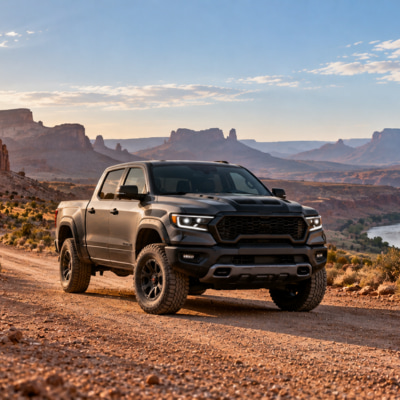
The Ram 1500 2026 Rebel draws from a lineup that offers several powertrains: a 3.6-liter Pentastar V6 with eTorque rated at 305 horsepower and 269 pound-feet, and a 3.0-liter Hurricane Standard Output at 420 horsepower.
Engine availability follows configuration, so the first step is confirming which unit sits under the hood of the exact truck being purchased.
That matters because oil capacity, service intervals and parts pricing differ meaningfully between a naturally aspirated V6 and a twin-turbocharged inline six.

How to build the service calendar for the Ram 1500 2026 Rebel ✅
A reliable plan comes from written figures, not from forum averages. Before the first scheduled visit, gather:
- the maintenance chart with mileage and time intervals for your engine;
- a fixed quote for each service, with parts and labor listed separately;
- the exact oil specification required for that powertrain;
- the inspection schedule for driveline and transfer case fluids;
- the separate coverage terms that apply to wear items;
- replacement pricing for a full set of all-terrain tires.
Post-trail inspection checklist 🪨
After any trail outing, check skid plates for impact marks, look for torn boots on steering and driveline joints, inspect the underbody for packed mud and confirm that no fluid is weeping from the differentials.
Ten minutes of inspection prevents the kind of damage that turns into a driveline rebuild.
Aggressive tread patterns wear unevenly when rotation is skipped, especially on a truck that alternates between highway miles and loose surfaces.
Sticking to the rotation interval in the manual is the cheapest way to extend the life of an expensive set.
Truck ownership concentrates spending in a few months rather than spreading it evenly. Setting money aside early avoids financing routine work.
Buyers still structuring the purchase can review how approval works on a vehicle loan with no money down before committing to a monthly payment.
Numbers that frame the Ram 1500 2026 Rebel ownership cost 📊
When projecting cost, the Ram 1500 2026 Rebel should be read through engine choice, drivetrain configuration and tire specification.
The engine determines oil volume and service pricing, the drivetrain adds fluids to monitor, and the tire specification concentrates the largest recurring expense of the ownership period.
There is a fourth factor that never appears on a spec sheet: how the truck is actually used.
A Rebel that sees weekly trail time will consume suspension components and tires far faster than one used mainly for highway commuting, even though both follow the same printed maintenance chart from the manufacturer.
| Engine | Output | Practical reading |
| 3.6-liter Pentastar V6 with eTorque | 305 horsepower and 269 pound-feet | Conventional service and wide parts availability |
| 3.0-liter Hurricane Standard Output | 420 horsepower and 469 pound-feet | Turbocharged unit with stricter oil requirements |
| 3.0-liter Hurricane High Output | 540 horsepower and 521 pound-feet | Highest output, most demanding maintenance profile |
| 5.7-liter HEMI V8 with eTorque | 395 horsepower and 410 pound-feet | Familiar V8 service pattern |
| Availability | Follows cab, bed and configuration | Confirm the engine on the exact unit purchased |
| Off-road hardware | Skid plates, all-terrain tires and tuned suspension | Adds post-trip inspection to the routine |
The table lists the powertrains available across the lineup, with availability tied to configuration rather than to trim name alone.
That distinction is the one worth confirming in writing before signing, because it determines the entire maintenance plan. Prices are excluded because they vary by dealer, region and period.
Risks and points of attention ⚠️
Three habits cost money. Skipping post-trail underbody inspections and discovering a torn boot only after the joint fails. Delaying tire rotation on an aggressive tread pattern.
And assuming towing capacity from published lineup figures instead of verifying the rating for the exact cab, bed, drivetrain and axle combination.
Buyers comparing financing structures can review how a zero down payment auto loan works.
Capability rewards a disciplined owner for the Ram 1500 2026 Rebel 🧭
Keeping a Ram 1500 2026 Rebel in shape comes down to three habits: confirming the engine before building the maintenance budget, inspecting the underbody after every trail outing, and rotating tires on schedule.
With those in place, the off-road hardware stays functional for years rather than becoming an expensive repair after the warranty period ends.
FAQ ❓
- Does off-road use void the factory warranty?
- Normal use within published limits does not, but damage from exceeding those limits is generally excluded from coverage.
- Are tires and brakes covered by the vehicle warranty?
- Wear items typically follow separate terms, often tied to the component manufacturer rather than the vehicle itself.
- Where can official truck information be confirmed?
- On the official Ram 1500 page, which publishes configuration details by build.
- How often should all-terrain tires be rotated?
- Follow the interval in the owner’s manual, which matters more on aggressive tread patterns than on highway tires.
- Does the largest engine cost much more to maintain?
- Turbocharged units generally demand stricter oil specifications and closer interval discipline than naturally aspirated ones.
